VR in Art and Fashion
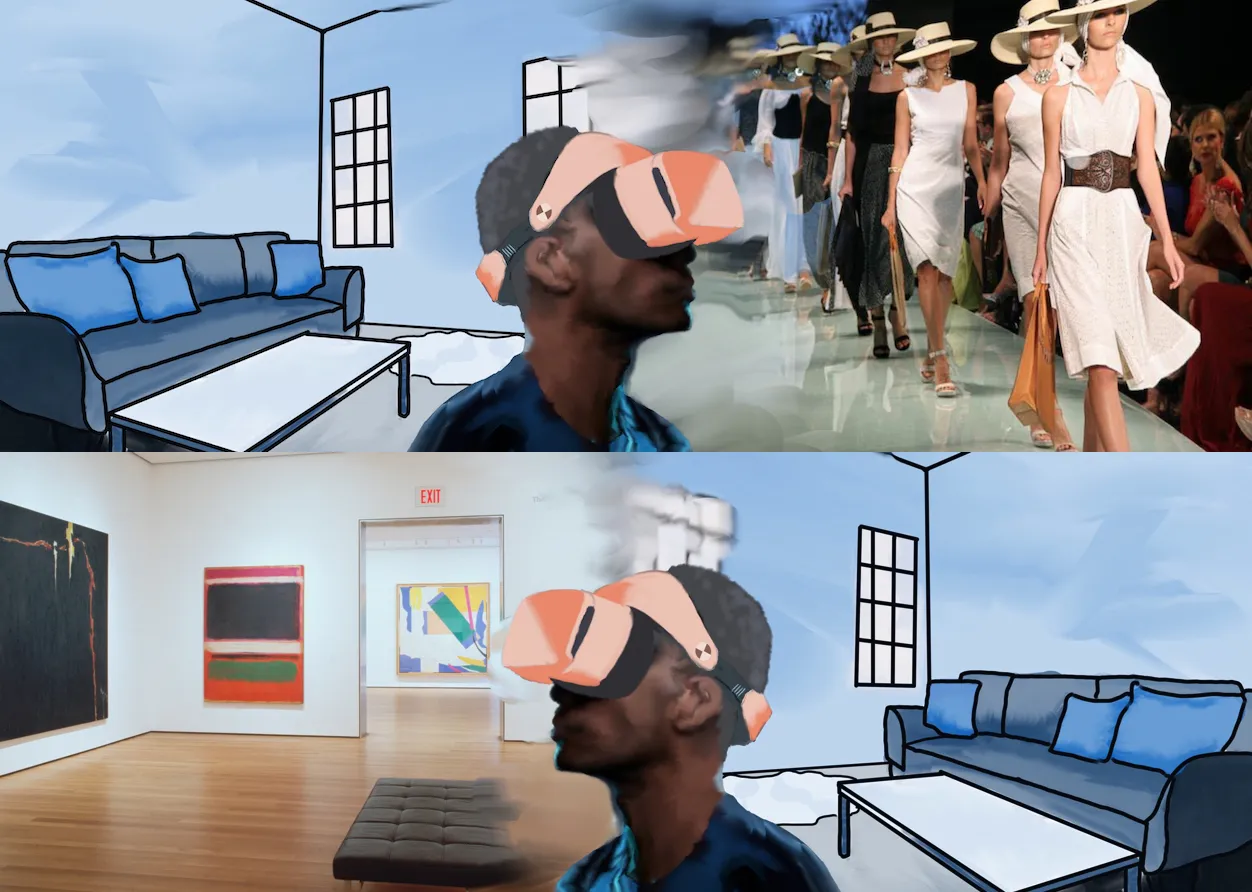
With the abrupt grounding of workers globally due to the COVID-19 pandemic, many industries have had to make a sudden and widespread transition to remote work. Naturally, this has opened up a large market for remote work software, as well as an intuitive space for virtual and augmented reality. For developers that were already testing the waters with virtual reality and remote interactions, this new climate has provided a sudden demand for their products, as well as incentive for others to pivot in the direction of extended reality for remote interpersonal connection. In particular, the fashion and art industries have seen the new global environment push the development and demand for many extended reality technologies.
Vortic XR
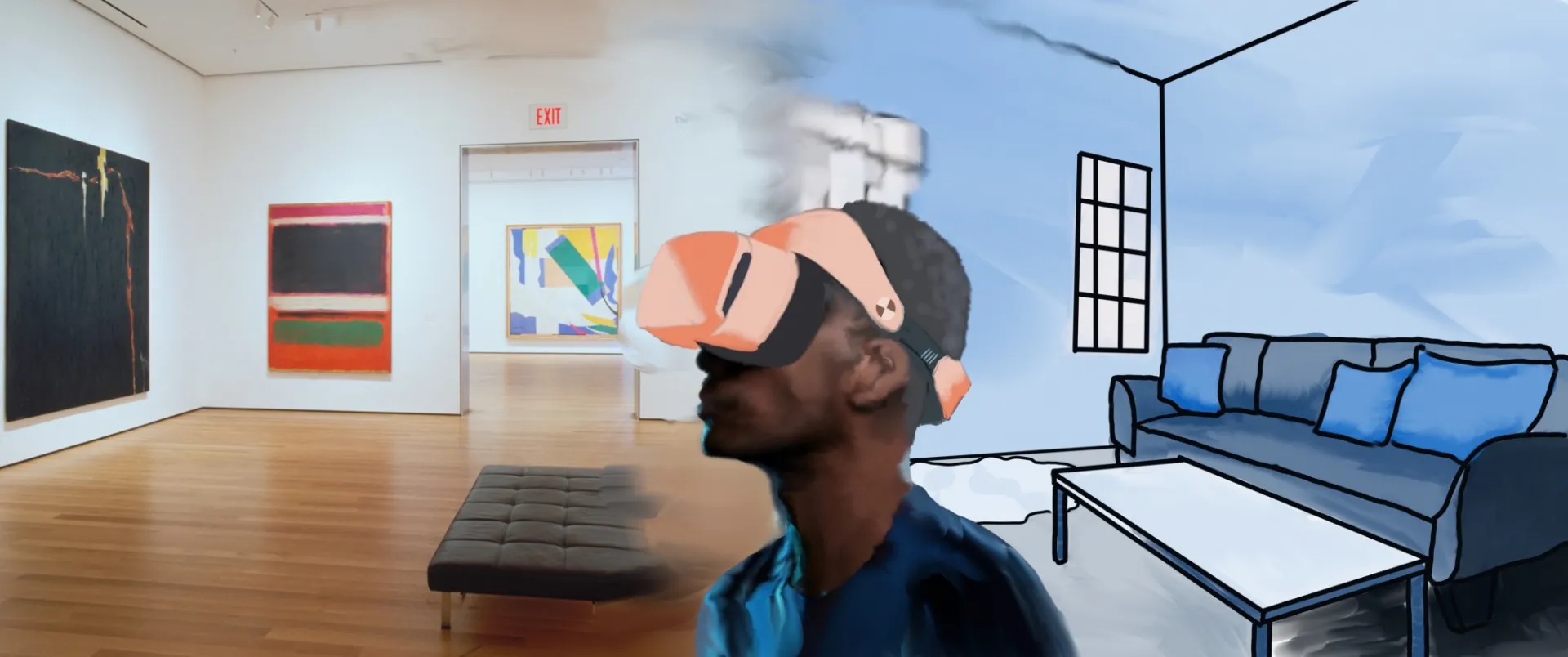
While not originally designed to combat global isolation, Vortic XR has piqued widespread interest in the art community. The app allows users to project pieces of art into their homes using virtual or augmented technology, or to create entire galleries in extended reality for consumers to peruse. Originally, the app was designed to ease the art purchasing process, as well as reducing the carbon footprint of art dealing.
According to an Artnet interview with app founder Oliver Miro, the “trigger point came after [Miro] had to ship a Yayoi Kusama painting from Japan to London and New York, then back to London, and then to Hong Kong before the collector decided that it wasn’t quite right for them.” Instead of physically moving people and art around the world, Vortic XR provides an alternative that saves resources, including time, money, and logistical headache.
Currently, there are two main ways to use the app. For gallery owners, the app has a feature that allows scanning of works to create a digital replica, allowing viewers to visit the virtual gallery to see the works from the comfort of their homes. For those looking to purchase, Vortic XR enables projection of the work into the user’s personal space. Currently, Vortic XR offers the following plan for their customers:
"While the full cost of the service will vary depending on the gallery, Miro estimates that scanning a large gallery space will be around £12,000 ($13,800), although he stresses that the initial gallery scan is a one-off cost, explaining that from then on a gallery would only pay a monthly subscription fee. These will be available at different tiers depending on how many renderings are included. As a comfort to galleries worldwide in the current situation, Vortic has decided to offer the first three months to galleries for free, including a one-month demo." - Artnet
While Vortic XR is mostly marketed towards private galleries and consumers, its concept would also fit very well for museums, many of which have been shuttered in light of the COVID-19 pandemic, providing a service that is in-demand both during and after this period of isolation. While organizations like Google Arts and Culture do provide virtual reality tours, many are composed of 360° videos of the gallery. An app like Vortic XR is unique in its feature to scan existing works and recreate them in a space that is more interactive than simple video. A format like this would be perfect to continue ‘showing’ works, and also opens jobs of digital curation for museum employees. Once the museums reopen, the digital gallery would continue to provide immense value to those unable to go in person. People with physical disabilities that make in-person museum visits cumbersome would be able to view works unhindered, or any bedridden individual would all benefit greatly from an app like this. Beyond that, virtual reality museums provide immense value simply to those physically distant from the museum.
VR in the Fashion Industry
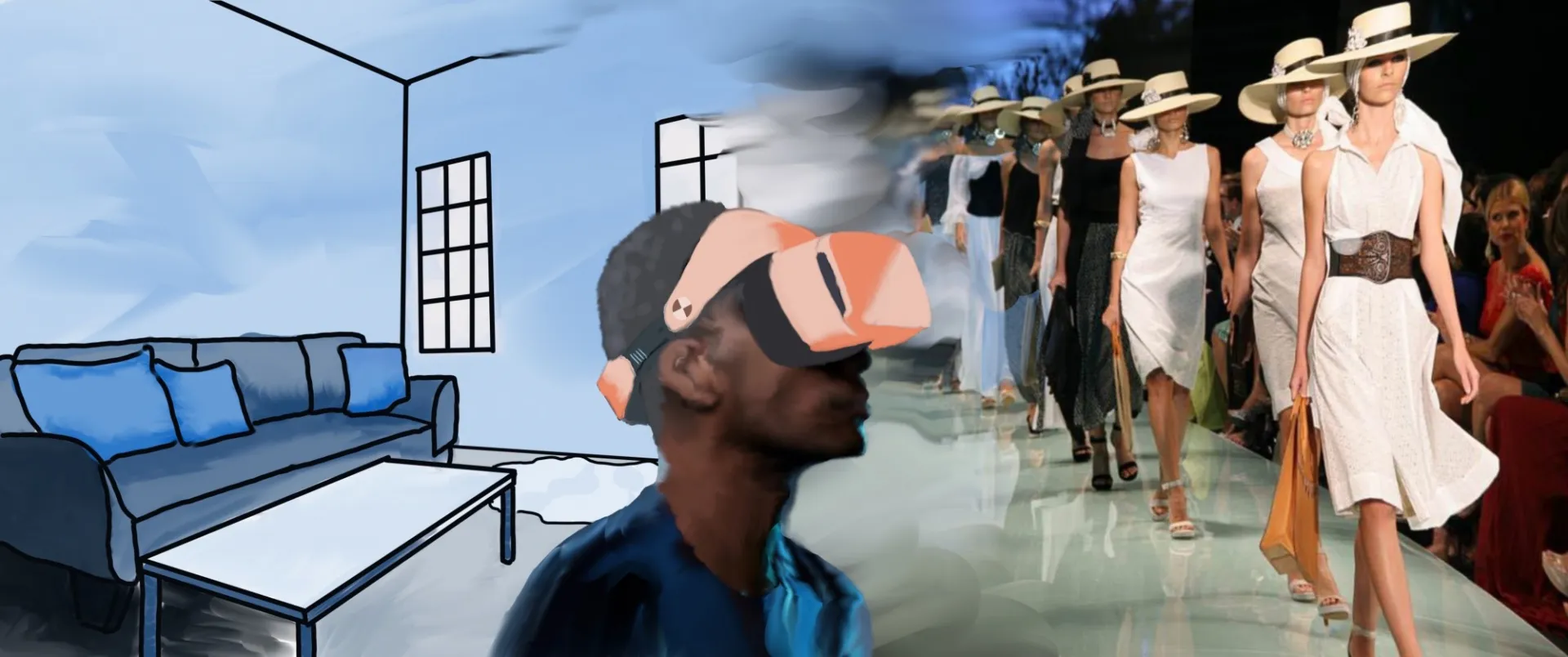
Similarly, in the fashion industry, extended reality has been experimented with long before the COVID-19 outbreak, but was unable to gain significant footing in the industry, with many designers still preferring to show their collections at traditional in-person shows. However, the need for virtual technology in the fashion industry has been felt particularly acutely in recent times.
In the most recent spring/summer events for Paris Fashion Week, held February 24th through March 4th, most of Europe and America were still operating normally. However, according to Vogue Business, travel restrictions from China prevented eight China-based designers from travelling to Paris to show their works. As a contingency, Tomorrow London Ltd chief development officer Julie Gilhart coordinated a backup, having each designer create a video showing their work. While effective as a stopgap, this incident exposed an acute need in the fashion industry for a more high-level technological approach to remote fashion. “We all think we are so technically connected,” says Gilhart, “but this has made us realise we are actually not. We are using [tech] as a tool but when the shit hits the fan, we aren't really prepared.”
A perfect medium for transferring fashion to a digital platform is extended reality. An important part of fashion unable to be preserved in two dimensional video is the immersive experience of seeing fashion. Being able to look at a garment from 360° is a critical part of the viewer’s experience, and having a digital platform also allows for viewers to slow down, pause or replay sections of a show, allowing for more time to explore and absorb the information.
Some are resistant to the movement away from traditional media for fashion shows. Certain effects cannot be accurately replicated digitally, such as the experience of live music, or physical effects such as artificial rain. However, the use of digital and mixed reality media also opens up a whole new world of creativity. Vogue Business’s Maghan MacDowell writes:
“People say it’s hard to replicate, but look at what movies can do. The length that people have gone to create these amazing fashion shows — like bringing in sand to recreate a beach — there is no reason why you can't have more effects [on video]. You could have a flying unicorn going across the screen,” says Connie Chan, general partner at Andreessen Horowitz. “The idea of what is possible should dramatically open up and the costs should go down.”
With this new push for a digitization of fashion, extended reality’s immersive nature is highly suitable for the fashion industry. Beyond merely being used for fashion shows, retail also offers numerous avenues of exploration. In addition to viewing clothing in a 3D space, VR can also allow people to create virtual avatars to try clothing in accordance to their personal measurements, making the already popular online shopping experience even more effective, as well as enjoyable.
Though extended reality technology has been available for quite some time, their adoption into various mainstream industries has been slow, mostly relegated to more fringe or experimental use. Compared against well-developed traditional systems, such as the in-person viewing of art and fashion, there was little demand for new or different ideas. While the global pandemic is certainly far from an ideal circumstance, these new circumstances have created keen demand for virtual solutions. Hopefully at the other end, the innovation that springs from this period of isolation will be able to gain footing in everyday life, and continue to help people beyond.