IBM Research Presents: An Introduction to Quantum Computing
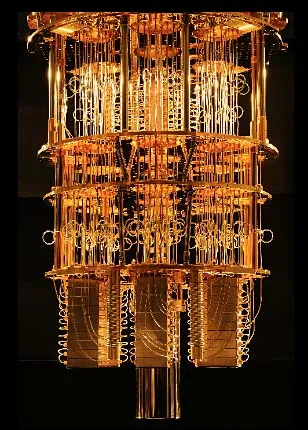
A New Style of Computing was presented by Scott Crowder, VP IBM Q / CTO &VP, Technical Strategy & Transformation, IBM Systems
Built on the principles of quantum mechanics, quantum computers take a new approach to processing information. We expect them to open doors that we once thought would remain locked indefinitely. There are 2 major differences from classical computing:
- exponential scaling
- access to the worldwide web.
What is exponential scaling? It involves solving problems classical computing can't - problems with a run time that grows and factors exponentially.
Two key elements are behind how quantum computers work:
- Superposition, which can put in a definite state between 1 and 0;
- Entanglement, the state of qubits which cannot be described independently of each other. The various types of quantum computing include: D-Wave Annealing, Approximate Universal Quantum Computing, and Fault-tolerant Universal Quantum Computing.
The performance metric benchmark: effective error + number of qubits.

What’s next for IBM?
- Q experience, designed for education, now available to the public
- QISKit - open source software, program in Python api to quantum computer, results in Jupyterhub
- Q Network – IBM’s partnership program
The IBM Quantum Experience launched in 2016. 5 & 16 qubit systems are available today. They include Github software.
Over 85,000 users have done over 4,400,000 experiments.
The IBM Q Network launched December of 2017. It accelerates research, launches commercial applications, educates and prepares users.