AICoP: Responsible AI - Safe & Ethical Use
Columbia AI Community of Practice Explores Responsible AI - Safe & Ethical Use
The Columbia AI Community of Practice hosted its final session of 2025, shifting the focus from the technical capabilities of AI to the critical frameworks needed to use it safely. The session was introduced by Senior Director Parixit Davé and featured a presentation by Spencer Ames, Associate AI Analyst from CUIT’s Emerging Technologies team.
What is Responsible AI
- A Shift in Focus: While 2025 was a year of exploring "agentic" systems and reasoning models, the adoption of these tools has outpaced our thinking about their responsible use.
- Defining Responsible AI: The presentation defined Responsible AI as critically choosing, designing, and using AI in ways that are aligned with human values and academic goals, attentive to risks and impacts, and supported by clear human accountability. This neither means being "anti-AI", nor getting swept up in hype. It involves
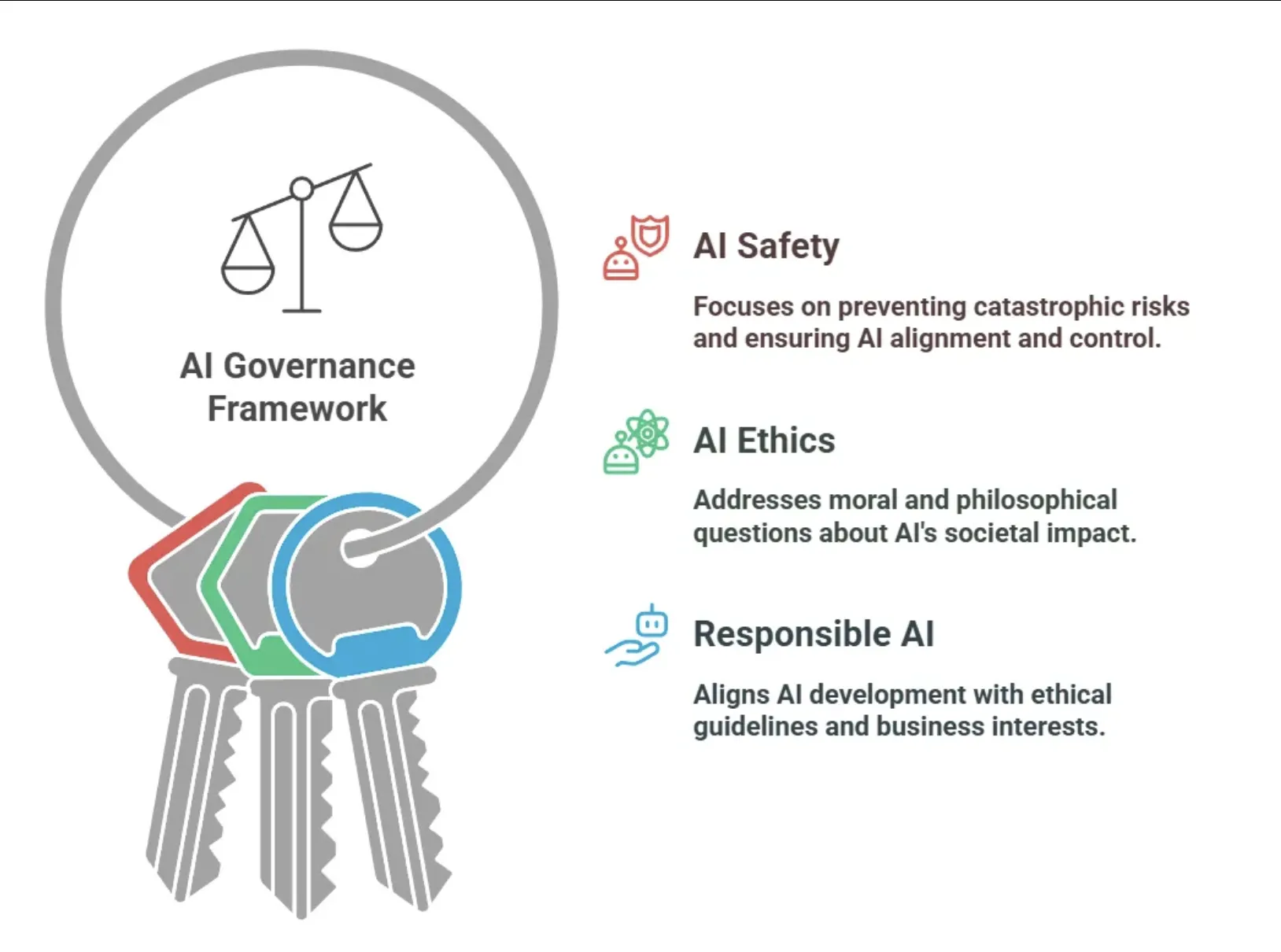
- Situating Ourselves: The landscape of AI safety, AI ethics, and responsible AI is vast. We currently focus on the short-term risks from existing AI, but there is much to learn from other parts of the landscape.
Why It Matters
- Protecting Institutional Trust: Columbia’s work relies on credibility in teaching and research. Responsible AI helps protect that legitimacy while still allowing for innovation.
- New Failure Modes: AI introduces unique risks, such as being "confidently wrong" or amplifying patterns of bias at a speed and scale that human-only workflows do not .
- General-Purpose Capabilities: AI is no longer a single tool but a capability embedded across writing, coding, and analysis workflows, requiring a broader safety strategy.
Principles of Responsible AI
- Human Agency & Accountability: Humans must remain responsible for decisions, especially in high-stakes contexts. The "Human-in-the-Loop" concept is vital—responsibility does not transfer to the vendor just because they provided the tool.
- Fairness & Inclusion: Small biases in data can compound into unequal outcomes for the diverse populations Columbia serves. For example, AI is not ideologically neutral. Models often reflect a Western, Educated, Industrialized, Rich, Democratic cultural bias.
- Privacy & Data Respect: Columbia University stewards highly sensitive data, including student records, staff records, and health data. Refer to our Data Classification Policy and AI Tool Data Classification Chart for best practices. Personal non-UNI LLMs (e.g., standard ChatGPT or Gemini) are classified as Public and are not suitable for Internal, Confidential, or Sensitive data.
- Transparency & Explainability: Trust depends on clarity. Stakeholders deserve to understand when AI is involved in a decision or output. This includes utilizing "Model Cards" provided by developers that detail limitations and training data. We can adopt similar transparency and explainability measures for using AI in our systems and work to foster a culture of mutual understanding, trust, and accountability.
- Safety, Security, & Reliability: Reliability is not the same as accuracy. The session reviewed safety benchmarks (measuring overconfidence and deception), noting that while newer models like GPT-5.1 and Claude 3 Opus show improved safety scores compared to older models like GPT-4o, vigilance is still required.
- Ongoing Monitoring Compliance isn't a "one-and-done" checklist. Because AI behavior can drift and capabilities change, we must treat every output as a draft and continuously verify facts.
Managing the Lifecycle
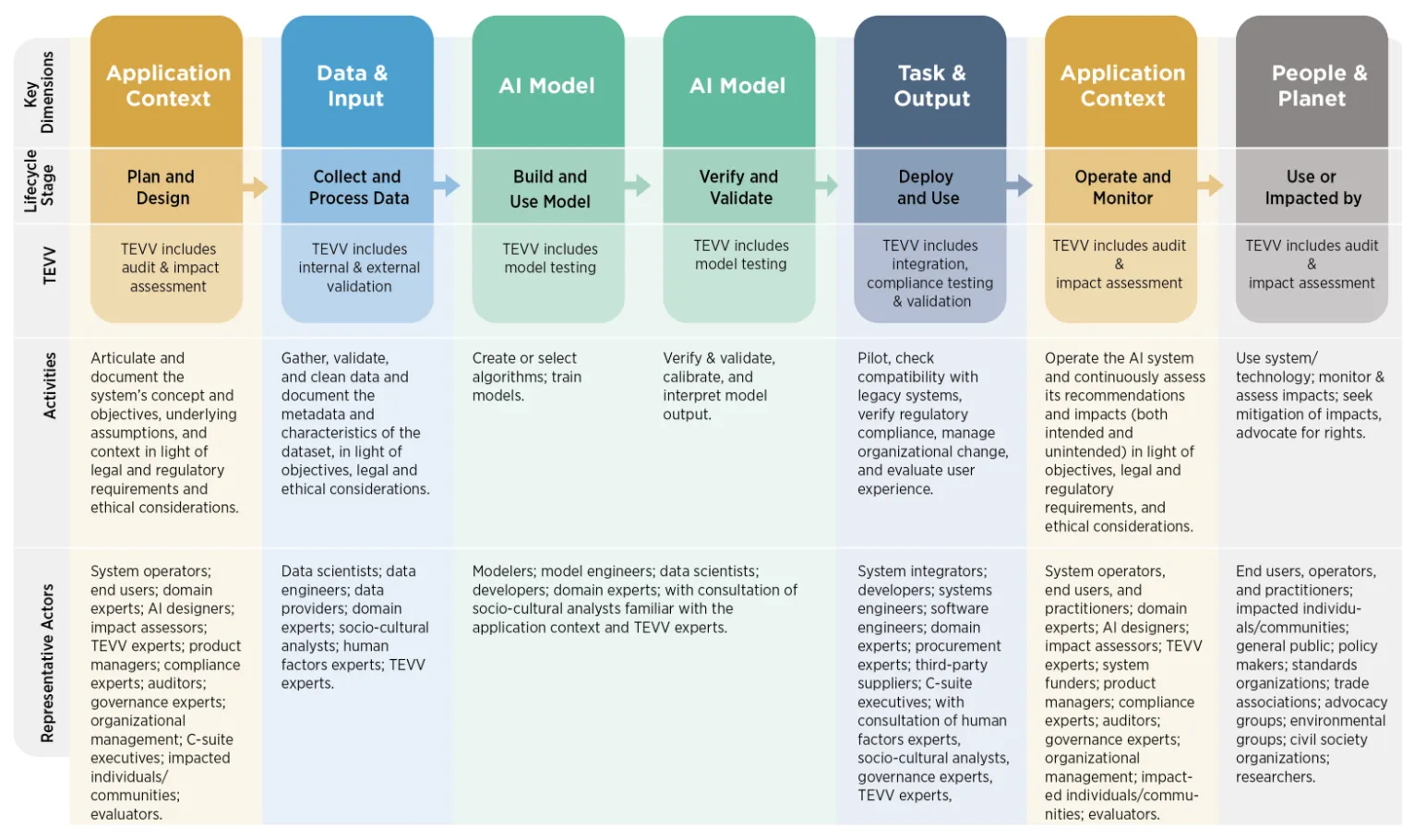
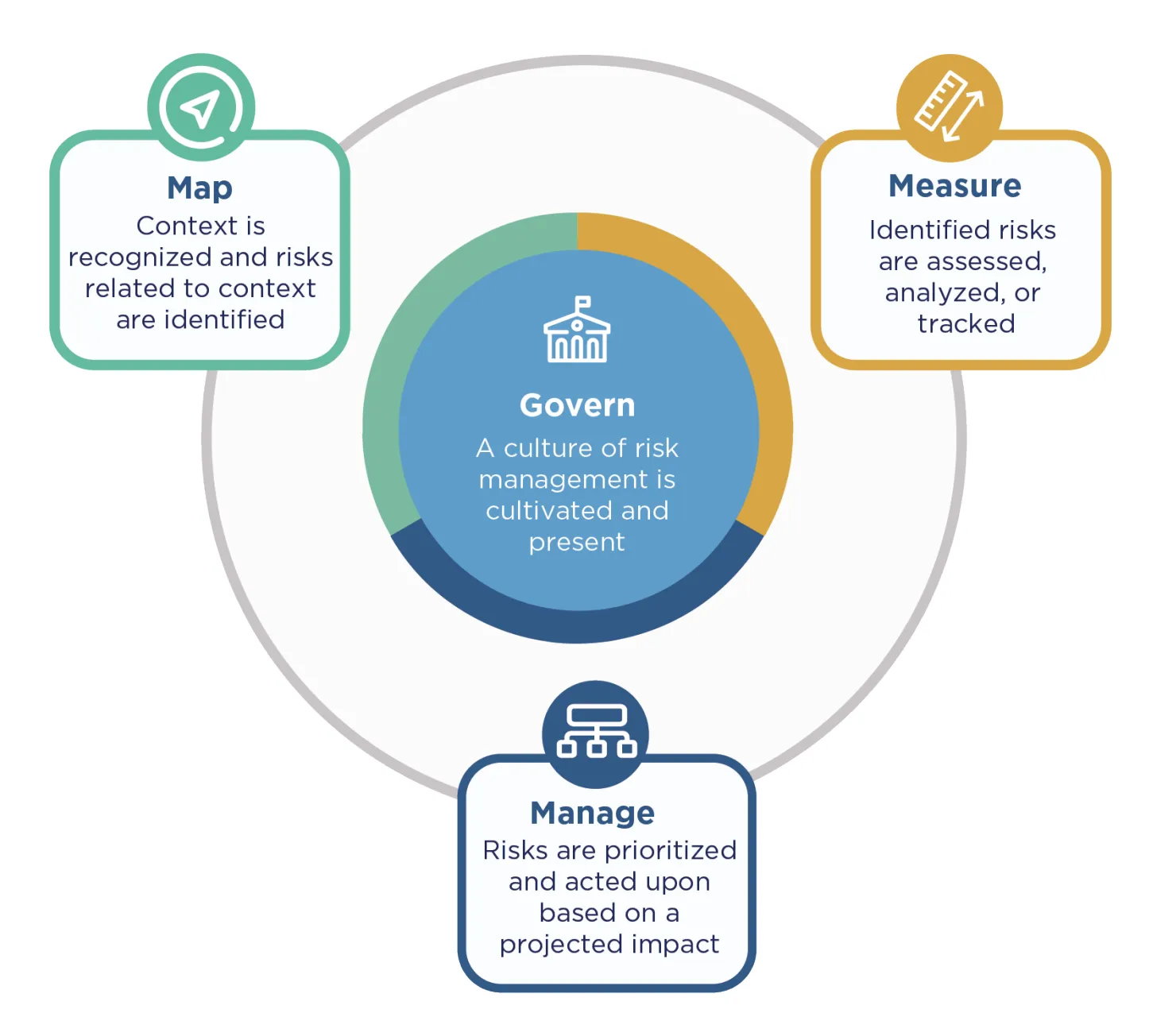
We also discussed that ethical interventions happen at different stages. While developers handle pre-deployment data training, we at the university (as deployers and users) are responsible for the post-deployment phase—monitoring impacts on our specific ecosystem. The National Institute for Standards and Technologies (NIST) unpacks these considerations, as well as the process of mapping, measuring, and managing risks, in their Risk Management Framework.
Community Insights from the Q&A
- Student Education: During the Q&A, Dr. Victoria Malaney-Brown (Director of Academic Integrity) emphasized the urgent need for student training on AI ethics and values, potentially during the upcoming Integrity Week.
- AI Integration: Robert Cartolano (AVP, Technology and Preservation) noted that by 2026, AI will be embedded in most standard tools (like JSTOR and Adobe), making responsible use a necessity across all disciplines, not just for "AI tools."
- Upcoming Events: Barnard College announced a symposium on "Responsible AI in the Liberal Arts" scheduled for February 6th.
Takeaway
Responsible AI is an ongoing practice of mapping, measuring, and managing risk. By adhering to core principles like human accountability and data privacy, the Columbia community can explore the benefits of these emerging technologies without compromising the university's values or integrity.
For questions or collaboration, contact: [email protected]